
Behind the Shot: How a Food Stylist Brings Dishes to Life
By: Jocelyn Pires
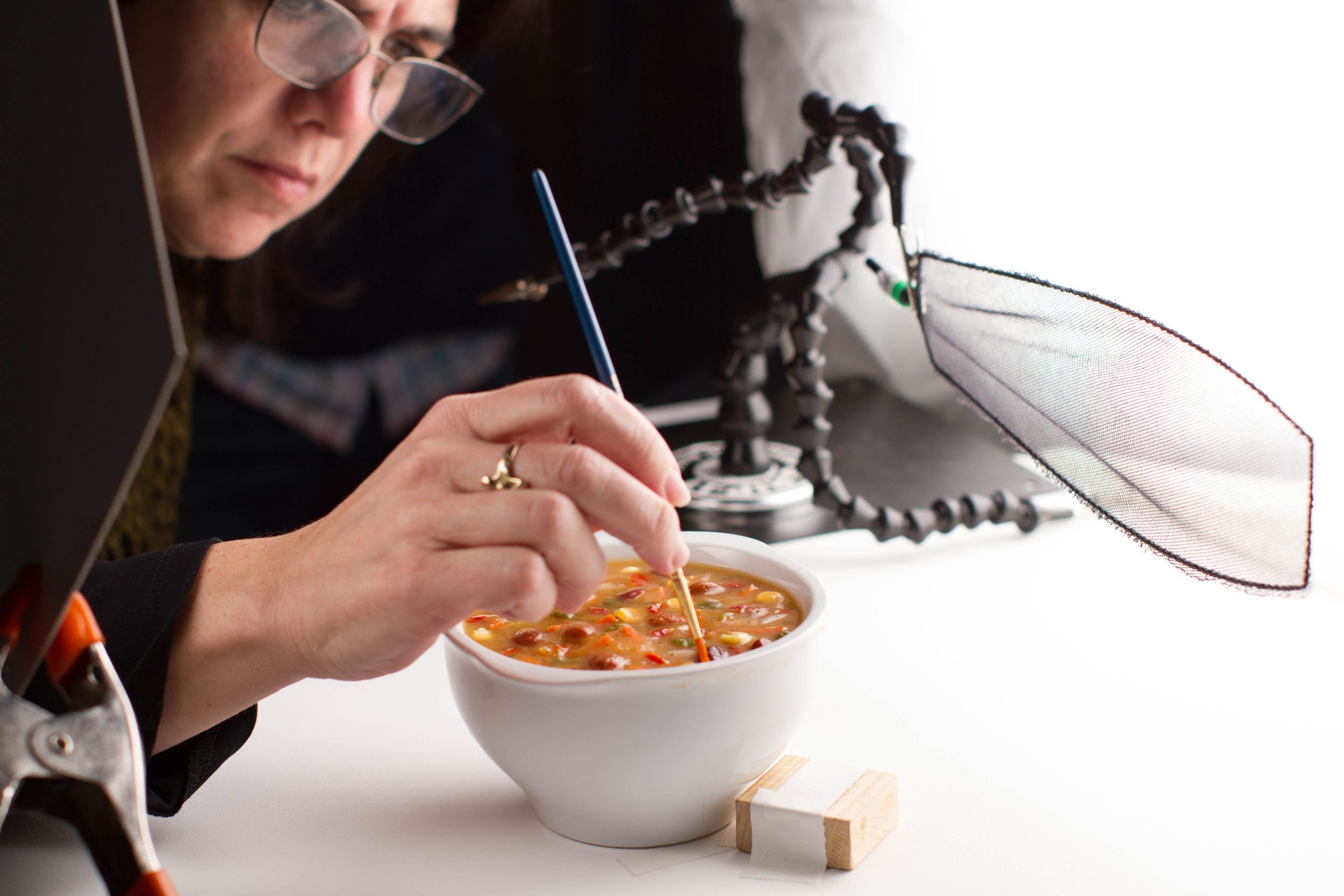
Food styling is an art that balances creativity, precision, and a deep understanding of ingredients. We sat down with Grace Peluso, Foundry 8 Budd’s talented food stylist, to learn what goes into making food look picture-perfect; from prep to the final shot.
Grace’s connection with Smith Design runs deep. She has worked with the studio at different points in her career, first joining as a graphic designer after graduating from The School of Visual Arts. Over time, she expanded her skills and industry knowledge, eventually becoming an account manager for one of Smith Design’s largest clients at the time. An opportunity arose for Grace that combined her love for visual arts with her passion for culinary arts; eventually, she found her way back to Smith Design as an in-house stylist and recipe developer. Today she draws from both her design background, and food industry experience, to create stunning imagery for clients, and a beautiful portfolio of custom cakes on the side.
QUESTION: What does a typical food styling session look like; from prep to the final shot?
ANSWER: Every project begins long before the camera starts rolling. The process starts in pre-production, where I carefully review the layout and anticipate any potential challenges. If clients send products in advance, we will test them to identify and resolve possible issues early on. Some shots (like the ever-tricky cheese pull) require practice sessions to perfect the technique.
Once the plan is finalized, I try to handle as much preparation as possible ahead of the shoot, from shopping and baking to creating multiple versions of each dish. For baked goods such as cookies, I will often make several dozen, so the team has plenty of options. On set, I will focus on lighting, angles, and camera perspective to ensure each dish looks its best. After everything is captured, we will reset, and get ready to do it all again the next day.
QUESTION: How do you keep food looking perfect and fresh during long shoots?
ANSWER: Food can spend hours under studio lights, so maintaining freshness is both a creative and technical challenge. I will delay adding sauces until the final moment and often undercooks vegetables to help them retain their color. Fried foods and baked goods tend to hold up best throughout a day-long shoot, while more delicate items, like cheese pulls or ice cream, require inventive techniques to keep them camera-ready. I feel my deep understanding of how ingredients behave allows me to plan accordingly and keep everything looking vibrant and appetizing for hours.
QUESTION: What are your go-to tools or “styling secrets?”
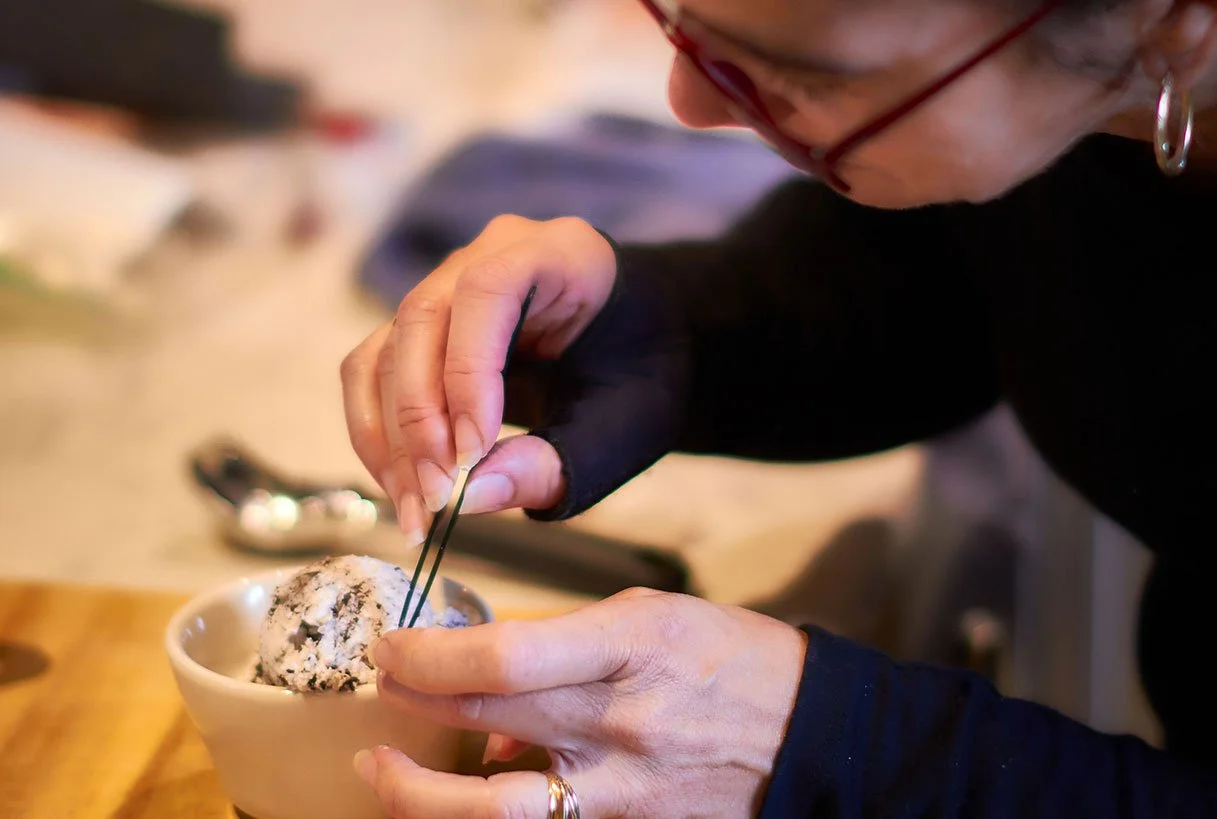
ANSWER: I never arrive on set without my trusted tools: a pair of paintbrushes (one fine, one soft), tweezers for precise placement, and herb scissors that allow her to trim delicate greens without bruising them. I also swears by paper towels, not just for cleaning plates but for subtly adjusting height, absorbing moisture, and creating natural texture. These simple tools help me refine every shot and maintain complete control over the final look.
QUESTION: How do you collaborate with photographers and the creative team?
ANSWER: Collaboration, for me, is all about communication and trust. I work closely with photographer Ken, with whom I’ve developed a strong creative partnership over the years. Together, we talk through ideas and troubleshoot challenges as they arise.
One memorable project involved creating a perfectly layered pumpkin latte. To achieve distinct, clean layers, I experimented with different thicknesses and textures until everything photographed beautifully. Through ongoing discussions with the photographer and art director, I ensure every detail aligns with the creative vision—and that each shot captures the food at its best.
QUESTION: What are the trickiest foods to style?
ANSWER: Cheese pulls, ice cream, and delicate items like rice or corn are particularly challenging because of temperature, timing, and consistency. Fried foods and baked goods are more forgiving. Small details matter; sometimes we need the “perfect” piece, which can involve painstaking adjustments while the team waits behind the camera.
QUESTION: What is one of your most memorable on-set challenges?
ANSWER: One memorable challenge involved styling ribs for a package shoot. Each rib needed to come from a different rack while maintaining a perfect curve and meatiness. By carefully selecting and preparing each piece and collaborating closely with the photographer, we achieved the look the client wanted without compromising the integrity and authenticity of the food.
QUESTION: How do you strike the balance between beautiful and believable?
ANSWER: My approach centers on authenticity. I rely on subtle techniques—like light brushing, moistening, or layering—to make dishes look naturally appetizing rather than over-styled. Every project requires balancing aesthetic perfection with realism, ensuring the food looks as delicious as it is believable.
QUESTION: How has social media changed the world of food styling?
ANSWER: Social media has opened new doors for creativity, allowing stylists like myself to experiment with color, movement, and mood in ways that traditional packaging work doesn’t always permit. It’s a looser, more playful space that encourages experimentation. Still, I’ll admit that the rise of AI-generated imagery can create unrealistic expectations; reminding me and my team that true artistry comes from real food, not digital perfection.
QUESTION: What is the biggest misconception people have about food styling?
ANSWER: Many people assume food stylists rely on fake ingredients, but I emphasize that my work is all about keeping things real. The process is detailed and time-consuming, involving multiple versions of each dish, hidden supports, and constant adjustments. What appears effortless on camera is actually the result of hours of preparation, patience, and problem-solving.
QUESTION: Where do you find inspiration?
ANSWER: Inspiration strikes me in unexpected places—often in supermarket aisles, restaurants, or cookbooks. I prefer to find ideas organically rather than online, paying attention to what catches my eye and asking myself why. Observing food in the real world reveals design details and color interactions that digital images simply can’t replicate.
QUESTION: What advice would you give to someone who wants to become a food stylist?
ANSWER: I encourage anyone interested in food styling to shadow experienced stylists, watch tutorials, and practice constantly. Understanding how food behaves under different conditions is essential, and even small personal projects can build skills and confidence. I believe hands-on experience is the most effective way to learn the craft.
QUESTION: What do you love most about your work?
ANSWER: No two days are the same, and that’s exactly what I love most. Each project brings new challenges and opportunities to problem-solve. Seeing a shoot come together seamlessly, and knowing the whole team feels proud of the result, is what keeps me inspired.
QUESTION: If you could style any dish or dream project, what would it be?
ANSWER: I love any project that allows me to develop recipes and make them visually stunning. I’m drawn to ideas that challenge her to think differently or create something entirely new. The most satisfying moments are when I bring a fresh concept to life that hasn’t been done before.
Food styling is a blend of creative techniques and problem-solving. From pre-production planning to the final shot, it’s a meticulous process that requires patience, observation, and a deep understanding of ingredients. Working with talented teams and constantly learning from each project makes it a craft that is as rewarding as it is challenging.